

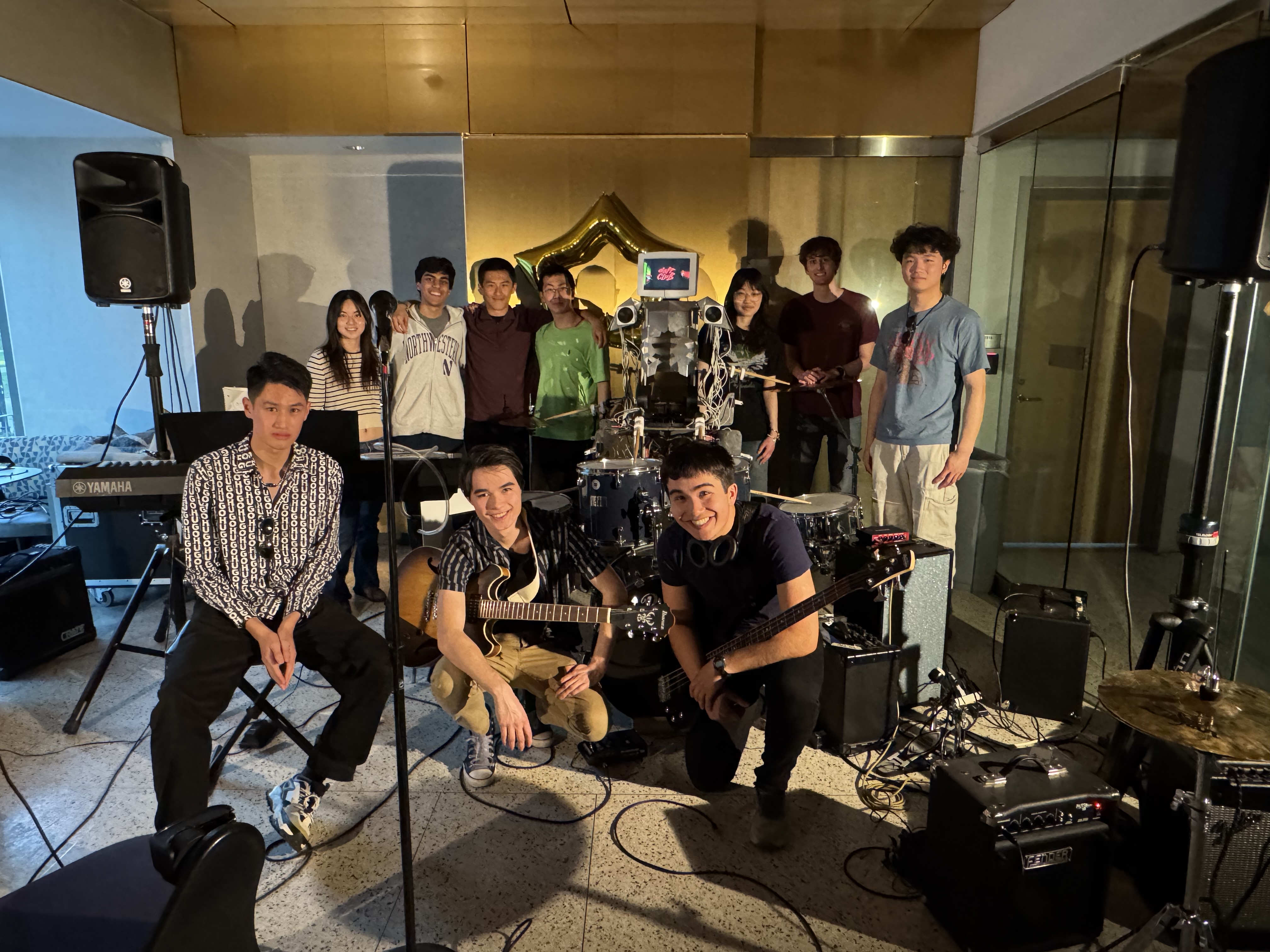
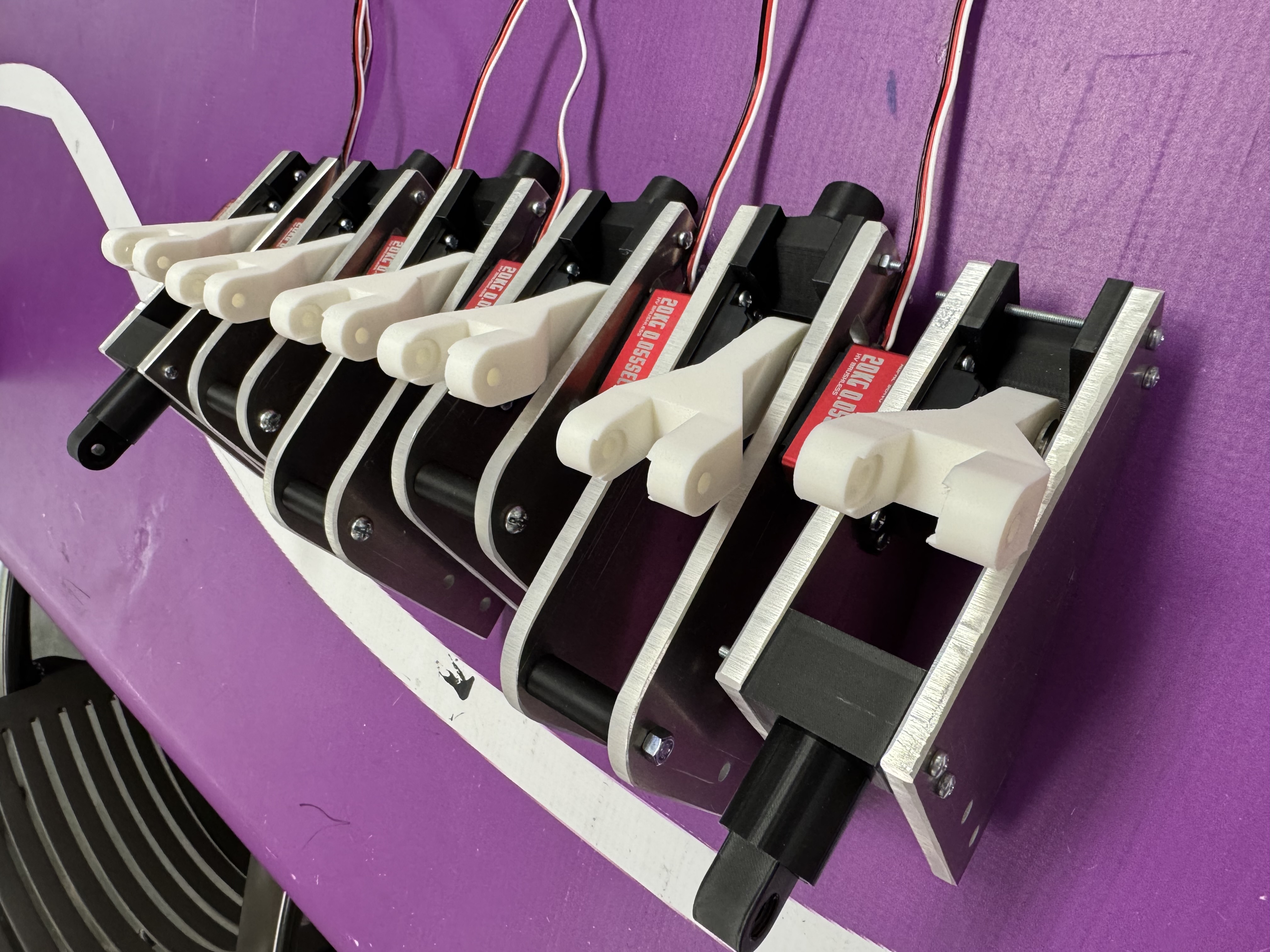
PULSE is the first project for the Creative Engineering and Robotic Arts Studio (CERAS) at Northwestern University, a group I founded near the end of Freshman year. Our goal is to challenge the utilitarian nature of engineering and robotics and to explore the intersection of art and technology.
I founded CERAS and led PULSE’s engineering direction. I owned the schematics and most of the firmware controlling the stepper motors and servos. I also wrote a Python script that used automated test routines to estimate differences in strike delay across MIDI note velocities, supporting timing calibration for expressive playing.
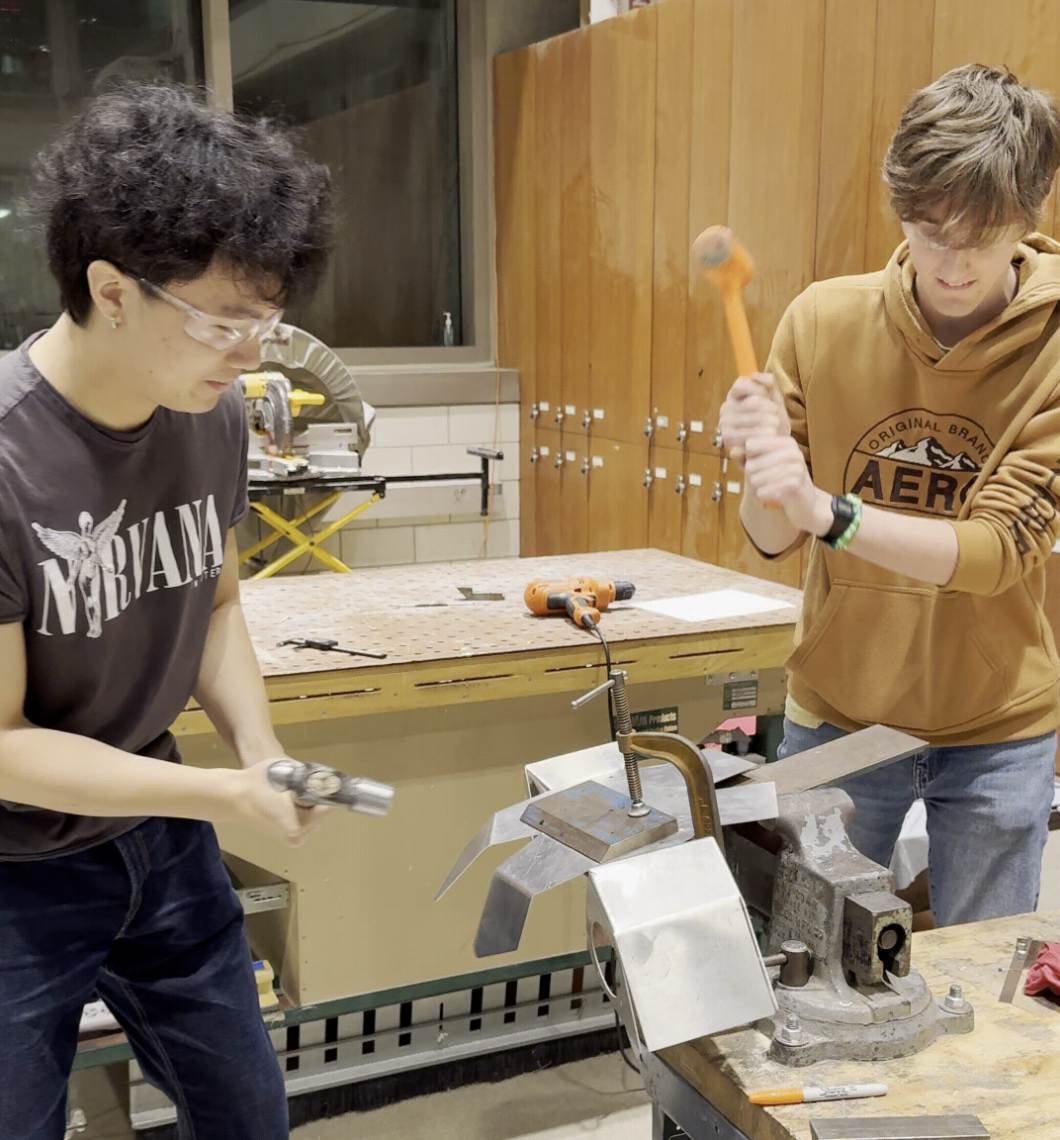
My teammates did most of the mechanical CAD and wiring. I coordinated that work with the electronics and firmware as we brought the robot together.
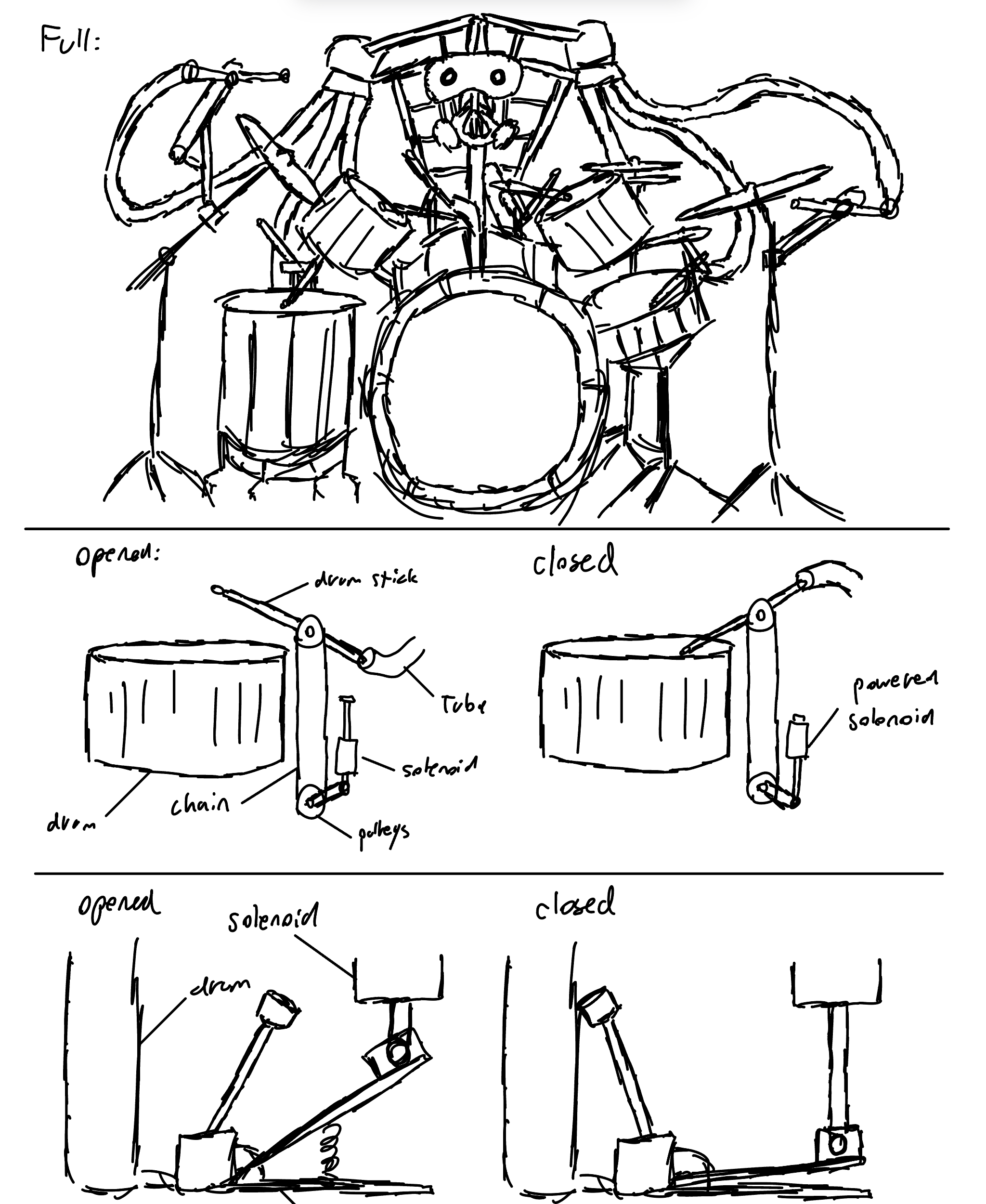
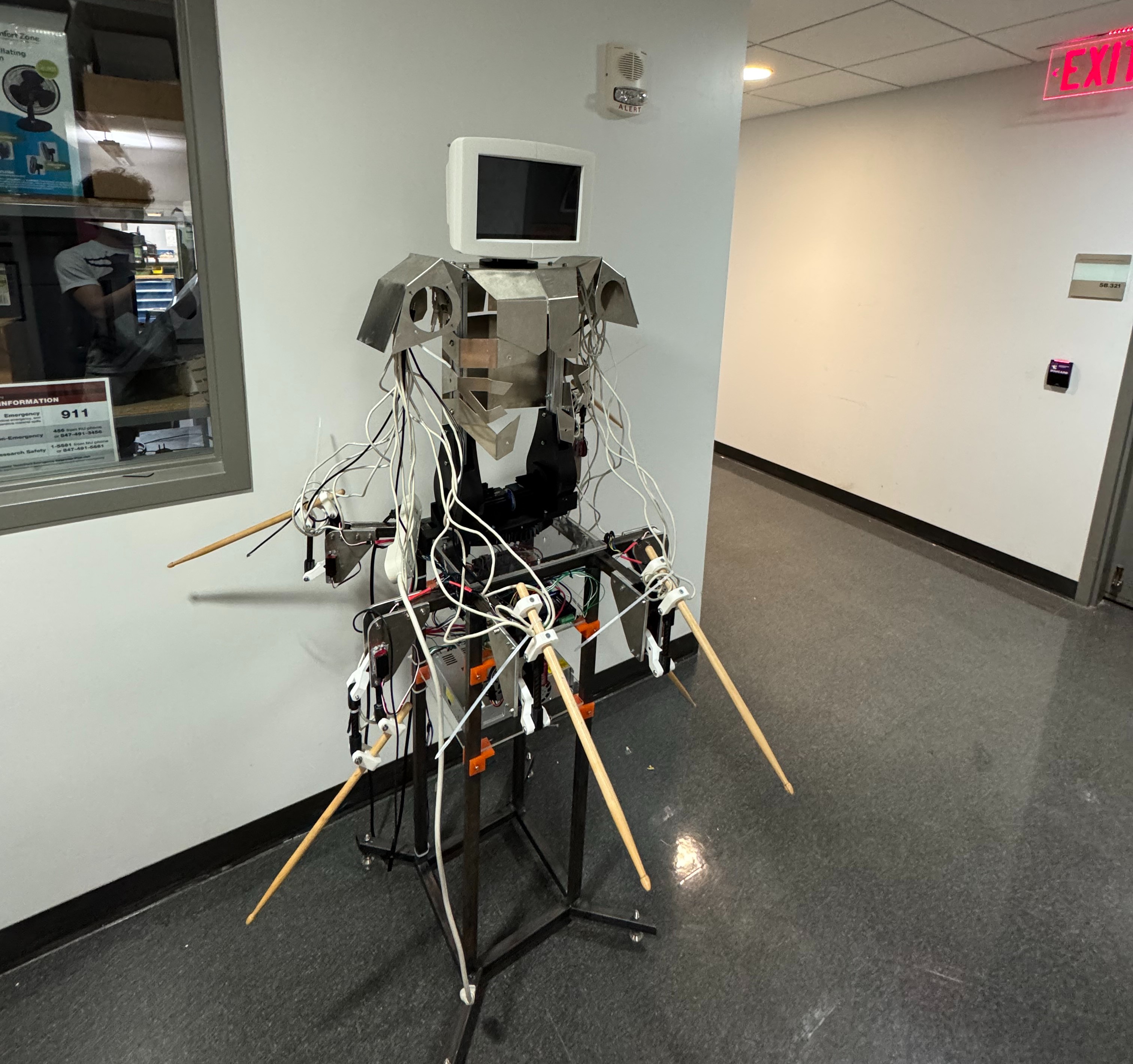
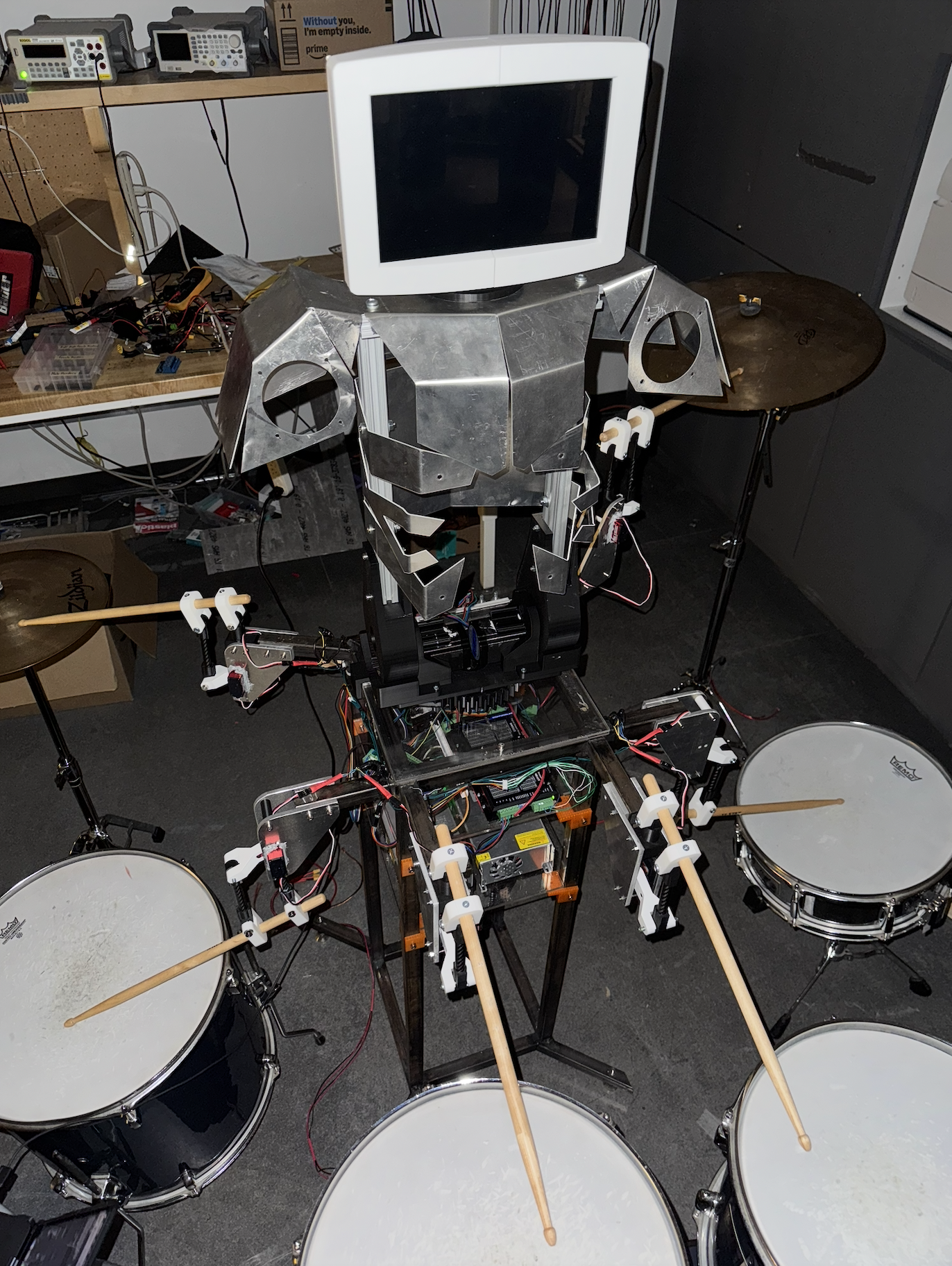
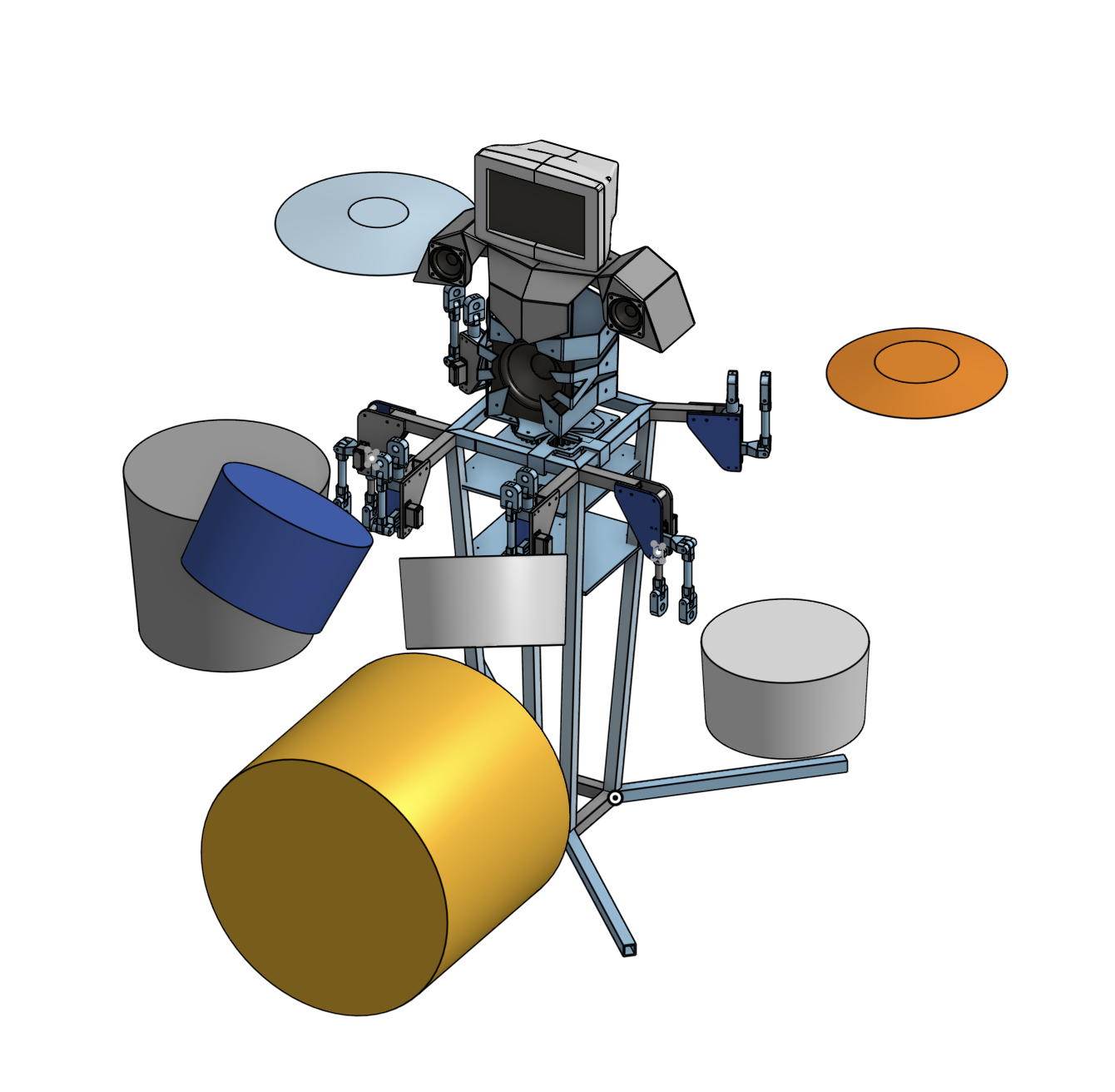
PULSE has six servo-actuated arms, two solenoid-actuated kicks, and three stepper motors on a welded stainless steel base, plus speakers and an LCD face. A Raspberry Pi running Linux handles high-level commands and communicates with the Teensy over I2C. The Teensy runs an RTOS to coordinate the servos, solenoids, and steppers, keeping their timing synchronized during a performance.